
Answer summary: Winter tires are made only for cold, snow and ice. All-weather tires are year-round tires that carry the mountain and snowflake symbol. All-season tires usually show only M+S. In Quebec, winter and all-weather tires with the symbol are legal. All-season tires with only M+S are not.
Key takeaways
- The three-peak mountain and snowflake symbol means the tire passed a snow traction test.
- M+S means mud and snow. CAA says M+S tires are not winter tires.
- All-season rubber gets hard below 7°C, says Transport Canada.
- All-weather tires carry the snowflake symbol, so they are legal in Quebec and B.C.
- Manitoba MPI no longer finances all-weather tires as of October 1, 2026.
- For the most grip on ice and deep snow, a dedicated winter tire is still the best choice.
Winter Tires vs All-Season vs All-Weather Tires in Canada: The Short Version
Three names, two symbols, and a lot of confusion at the tire counter. Here is what each one really is.
| Tire type | Symbol on the sidewall | Made for | Legal in Quebec winter? |
|---|---|---|---|
| Winter tire | Mountain and snowflake | Cold, snow and ice only | Yes |
| All-weather tire | Mountain and snowflake | All year | Yes, because it has the symbol |
| All-season tire | Usually M+S only | Spring, summer, fall, light snow | No, unless it has the symbol |
The symbol on the sidewall decides what the law sees. The name on the ad does not.
What the Three-Peak Mountain Snowflake Symbol Means
Transport Canada says tires with the peaked mountain and snowflake symbol meet set snow traction requirements. They are made for severe snow.
Quebec is very specific. The rule says the mountain must have three peaks, with the middle one the highest, and a six-point snowflake inside. If a tire has this symbol, or is studded, it counts as a winter tire in Quebec.
One note. Transport Canada has said it found the symbol on some tires that do not meet the test. It proposed a rule change to stop that. So buy from a known brand and a real tire shop.
What M+S on a Tire Really Means
M+S stands for mud and snow. You see it on many all-season tires.
CAA is clear about it. M+S tires are not winter tires. They grip better than summer tires in light snow, but not as well as winter tires in deep snow and cold.
B.C. accepts M+S as the legal minimum on signed highways, if the tread is at least 3.5 mm. But the B.C. government itself recommends the mountain and snowflake for cold weather. Quebec does not accept M+S alone at all.
Why All-Season Tires Struggle Below 7°C
Transport Canada says all-season and summer tires start to lose their stretch below 7°C. The rubber gets hard, so it grips less. CAA says the same.
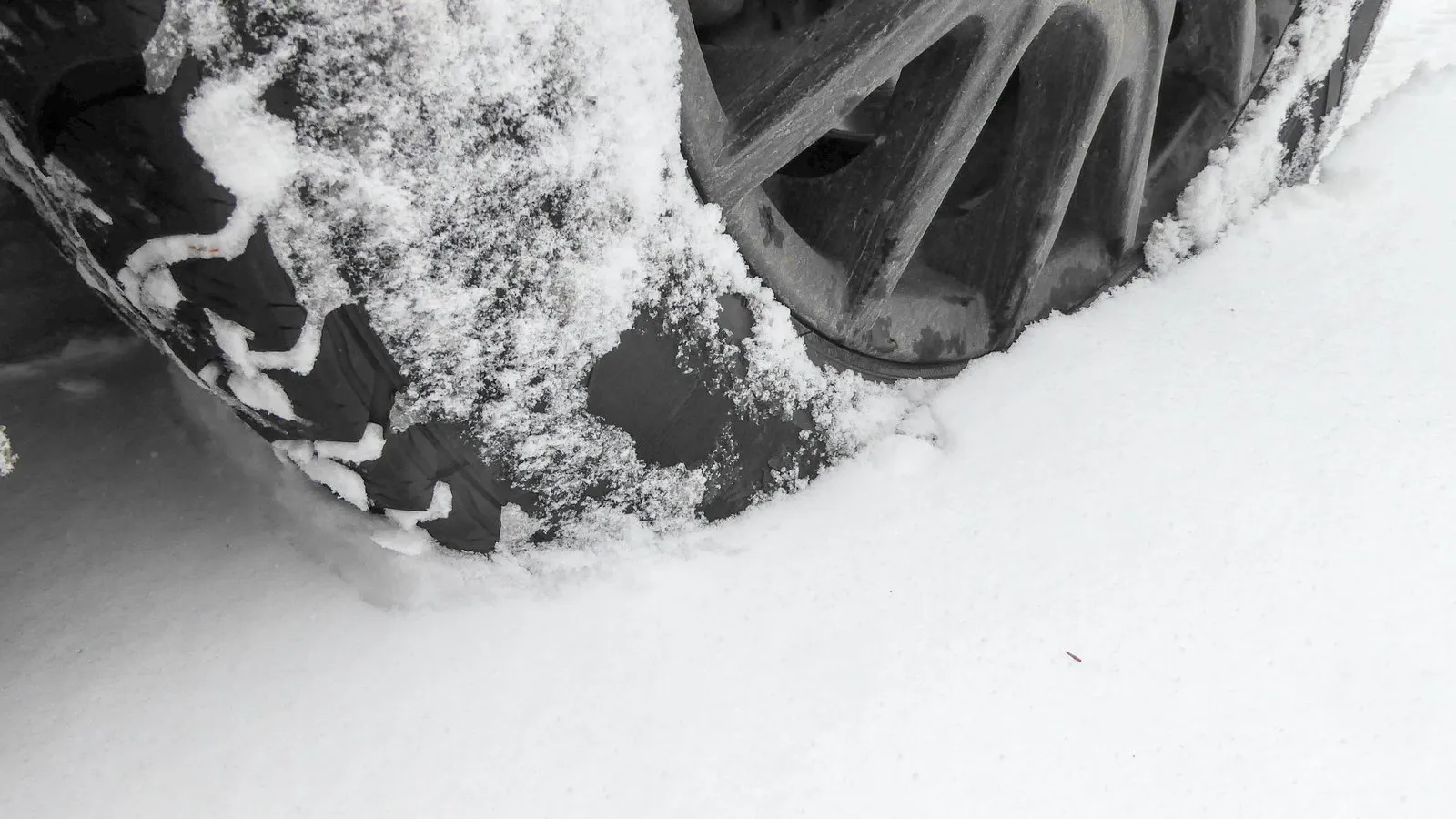
Winter tires use softer rubber that stays flexible in deep cold. They also have deep tread and many small cuts called sipes. CAA says those cuts bite into snow and ice, and the tread pushes water and slush away. CAA says winter tires can give up to 50% more traction than all-season tires.
Are All-Weather Tires Good Enough for a Canadian Winter?
All-weather tires are a middle ground. They have the snowflake symbol, so they pass the snow test, and you can leave them on all year.
They make sense for some drivers. Think of a city driver in southern Ontario or coastal B.C. who has no space to store a second set. The B.C. government lists all-weather tires among the mountain and snowflake tires it says give better grip on snow and ice.
But there is a catch. They are built to handle summer heat too, so they give up some grip in deep cold and on ice. That is why Manitoba Public Insurance changed its loan rules. As of October 1, 2026, MPI only finances tires made and sold for winter. All-weather, all-season, four-season and year-round tires no longer qualify, even with the symbol.
My advice is simple. If you live where winter is long, cold and snowy, or you drive rural roads and highways, buy real winter tires. If winters are mild and you mostly drive in the city, all-weather tires are a fair choice.
Which Tire Is Right for You: A Quick Guide
- Quebec, the Prairies, northern Ontario, B.C. interior: dedicated winter tires.
- Mild coastal B.C. or southern Ontario city driving: all-weather tires can work.
- All-season tires with only M+S: not for Quebec winters, and not the best choice anywhere it gets truly cold.
For the rules in your province, see our winter tire law guide by province. For timing and tread checks, read when to put winter tires on and how to check tread. And to save money on your set, see our winter tire insurance discount and MPI loan guide.
If you drive an EV, tires matter even more, because EVs are heavy. See how much EV range you lose in winter.
FAQ
What is the difference between all-weather and winter tires?
Both carry the mountain and snowflake symbol. Winter tires are made only for cold, snow and ice. All-weather tires are made to stay on all year, so they give up some grip in deep cold.
Are all-weather tires legal in Quebec in winter?
Yes, if they have the three-peak mountain and snowflake symbol. Quebec accepts any tire with that symbol, or a studded tire, from December 1 to March 15.
Are M+S tires winter tires?
No. CAA says M+S tires are not winter tires. They are legal on signed B.C. highways with 3.5 mm of tread, but not in Quebec.
Why do all-season tires lose grip in the cold?
Transport Canada says their rubber starts to get hard below 7°C. Hard rubber grips less, so stopping and turning take more distance.
Does Manitoba MPI finance all-weather tires?
Not anymore. Since October 1, 2026, MPI's Winter Tire Program only covers tires made and sold for winter, with the mountain and snowflake symbol.


