
Answer summary: Winter tires are the law in Quebec from December 1, 2026, to March 15, 2027. In B.C., you need winter tires or chains on most signed highways from October 1 to April 30. Ontario does not require them, but every insurer must offer a discount. Manitoba MPI offers a low-rate winter tire loan.
Key takeaways
- Quebec: winter tires are required from December 1 to March 15. The fine is $200 to $300.
- Quebec only accepts tires with the mountain and snowflake symbol, or studded tires.
- B.C.: winter tires or chains are required on most signed highways from October 1 to April 30. Some routes end March 31. The fine is $121.
- Ontario: winter tires are not the law. But every insurer has to offer a winter tire discount.
- Manitoba: MPI lends up to $2,000 per vehicle for winter tires at prime plus 2%.
- Put winter tires on when it stays below 7°C. Do not wait for the first snow.
Canada Winter Forecast 2026-2027: Why Winter Tires Still Matter in a Mild Winter
The Weather Network released its Canada winter forecast 2026-2027 this month. In its October 7 outlook, the network said a record El Niño could give Canada one of its mildest winters in years. It said December could feel more like an extended fall.
That sounds like good news. But read the rest. The same forecast warns of sharp cold bursts and big storms in late January and February. It says parts of Ontario and Quebec could be "especially sensitive" when storms hit with temperatures near freezing.
In my years around cars, mild winters have not been the easy ones. Near-zero days bring wet snow, slush and black ice. That is where cold, hard all-season rubber lets you down. A mild forecast is not a reason to skip winter tires. And in Quebec, the law does not care about the forecast. December 1 is December 1.
If you want more on the cold side of this winter, read our guide to the polar vortex and how to get your car ready.
Winter Tire Law in Canada: Province by Province Table for 2026-27
There is no single winter tire law in Canada. Each province makes its own rules. Here is what the official sources say.
| Province | Are winter tires required? | Dates | Which tires count | Fine | Studded tires |
|---|---|---|---|---|---|
| Quebec | Yes, on all Quebec plated passenger vehicles | Dec. 1 to March 15 | Mountain and snowflake symbol, or studded | $200 to $300 | Oct. 15 to May 1 |
| British Columbia | Yes, on most signed highways | Oct. 1 to April 30 (some routes end March 31) | M+S or mountain and snowflake, with 3.5 mm tread or more | $121 | Oct. 1 to April 30 |
| Ontario | No | None | Not set by law | None | Not covered here |
| Manitoba | No | None | MPI loan needs the mountain and snowflake symbol | None | Not covered here |
Other provinces and territories do not appear on this list because we could not confirm their rules on an official page. If you live there, check with your provincial transport ministry. And if you drive into Quebec or B.C., their rules apply on their roads.
Winter Tires in Quebec: The December 1, 2026 Deadline Explained
The Quebec government says your vehicle must be ready for winter from December 1 to March 15. This covers every motor vehicle with Quebec plates, rental cars too. Drivers who do not follow the rule face a fine of $200 to $300.
Which Tires Are Legal in Quebec
Quebec is strict about the symbol. A tire counts only if it has the pictogram of a mountain with three peaks and a snowflake, or if it is studded. M+S on the sidewall is not enough in Quebec.
This catches people every year. They buy a used car with "all-weather" or "mud and snow" tires and think they are covered. Look for the mountain and snowflake on the sidewall. If it is not there, it does not count.
Exemptions and Studded Tire Dates in Quebec
The rule does not apply to trailers, heavy vehicles or vehicles plated outside Quebec. The spare tire is also exempt. If you buy a car from a dealer, you get seven days. The SAAQ can also give a seven-day exemption certificate in some cases.
Studded tires are allowed in Quebec from October 15 to May 1 on passenger vehicles and taxis.
The government also says to wait a few weeks after March 15 before taking winter tires off. Spring in Quebec likes to fool us.
BC Winter Tire Law: Highway Rules From October 1 to April 30
B.C. works a different way. There is no rule for every road. Instead, winter tires or chains are required on most signed highways from October 1 to April 30. On some highways that are not in mountain passes or high snow areas, the rule ends March 31. Watch for the signs.
Drivers who are not ready can be turned back and fined $121 under the Motor Vehicle Act.
What Counts as a Legal Winter Tire in B.C.
The province says a legal winter tire must:
- Have at least 3.5 mm of tread.
- Show either M+S or the three-peak mountain and snowflake symbol.
M+S is the legal minimum in B.C. But the province itself recommends the mountain and snowflake symbol for cold weather. Summer tires are not allowed on signed highways in the winter months, even with chains on them.
You also need at least two matching winter tires on the drive axle. Four is better.
Lower Mainland and Vancouver Island Drivers
Many roads around Vancouver and southeast Vancouver Island do not require winter tires. But the Malahat does. So do most highways once you leave the coast. If you are going to Whistler or over the Coquihalla, you need them. Studded tires are allowed on B.C. highways from October 1 to April 30.
Are Winter Tires Mandatory in Ontario? No, but You Can Save on Insurance
Winter tires are not mandatory in Ontario. But since January 1, 2016, Ontario law has made every insurer offer a discount to drivers with winter tires.
Each insurer sets its own discount and its own rules. Some ask for proof. Some set install dates. Call your insurer or broker and ask. It takes five minutes, and the savings come back every year. We break down the numbers in our winter tire insurance discount and MPI loan guide.
The Ontario government also says good winter tires can cut braking distance by as much as 25%. That is the gap between stopping in time and hitting the car in front.
Manitoba MPI Winter Tire Program: Loan Rate, Terms and the New 2026 Rule
Manitoba does not require winter tires. But Manitoba Public Insurance (MPI) helps you pay for them.
- You can finance up to $2,000 per vehicle.
- The rate is prime plus 2%.
- You pay it back over one to four years, with monthly payments.
- It covers tires, rims, mounting, balancing, sensors and some studding.
You must be an MPI customer with a passenger vehicle or light truck in your name.
Here is the big change. Tires must show the mountain and snowflake symbol. And starting October 1, 2026, they must also be made and sold only for winter. Tires sold as all-weather, all-season, four-season or year-round no longer qualify, even with the symbol.
When to Put Winter Tires On: The 7°C Rule and a Simple Tread Check
The 7°C Rule
Transport Canada says all-season and summer tires start to lose grip below 7°C. The rubber gets hard. Winter tires stay soft much colder.
CAA gives an easy tip. When you can see your breath outside, or it stays under 7°C during the day, it is time. In most of Canada, that is late October or November. Book early. Tire shops fill up fast in the last two weeks of November, and I have seen people wait well into December.
Check Your Tread With a Toonie
Before you put last year's set back on, check the tread. CAA says to put a toonie in the groove. If the tread covers more than a quarter of the coin, the tire is good for another season.
Transport Canada says not to use tires worn close to 4 mm on snowy roads. In B.C., anything under 3.5 mm is not a legal winter tire. For a full step by step, see when to put winter tires on and how to check tread.
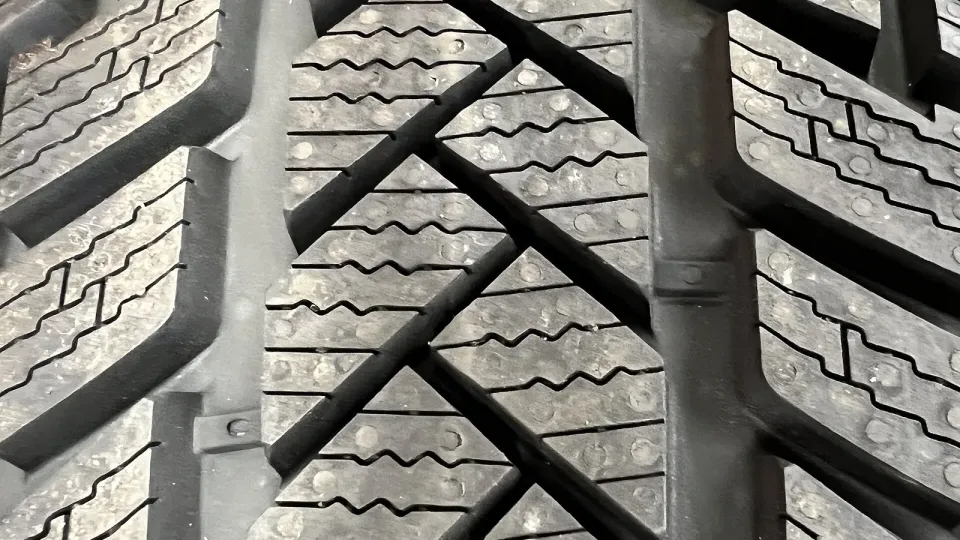
Three-Peak Mountain Snowflake vs M+S
These two symbols get mixed up a lot.
- Mountain and snowflake: the tire passed a snow traction test. Transport Canada says it is made for severe snow.
- M+S: means mud and snow. CAA says these are not winter tires. They grip better than summer tires in light snow, but not in deep snow and cold.
Quebec only accepts the mountain and snowflake (or studs). B.C. accepts both. If you want one rule that works everywhere, buy the mountain and snowflake. Our guide to winter tires vs all-season vs all-weather tires explains the choice in more detail.
Install Four, Not Two
Transport Canada says to put winter tires on all four wheels, with the deepest tread at the back. Two winter tires on the front can make the back of the car slide out in a turn. I have seen that end in a ditch more than once.
Before Your First Winter Drive
Winter tires are one part of being ready. The other part is the dark. Clocks go back on November 1, so many of us will drive home at night with wet roads and low sun. Read our guide to driving in the dark after the time change.
If you drive an EV, cold weather also cuts your range. See how much EV range you lose in a Canadian winter.
FAQ
When do winter tires have to be on in Quebec in 2026?
They must be on by December 1, 2026, and stay on until March 15, 2027. This applies to all vehicles with Quebec plates, rentals included. The fine is $200 to $300.
Is the winter tire law the same across Canada?
No. Quebec requires them on all roads from December 1 to March 15. B.C. requires them on most signed highways from October 1 to April 30. Ontario and Manitoba do not require them.
Are all-season tires with M+S legal winter tires?
In B.C., yes, if they have at least 3.5 mm of tread. In Quebec, no. Quebec only accepts the mountain and snowflake symbol or studded tires.
Do I get an insurance discount for winter tires in Ontario?
Yes. Since 2016, Ontario insurers must offer a winter tire discount. Each company sets the amount and what proof it needs, so call your insurer.
When should I put my winter tires on?
Put them on when the temperature stays under 7°C. All-season rubber gets hard below that. In most of Canada, that means late October or November. Book early to avoid the rush.
Sources
- Gouvernement du Québec, Requirements for winter tires
- Gouvernement du Québec, Obligation des pneus d'hiver
- LégisQuébec, Regulation respecting the use of tires specifically designed for winter driving (C-24.2, r. 45)
- SAAQ, Winter driving
- Province of British Columbia, Passenger vehicle tire and chain requirements
- Province of British Columbia, Designated winter tire and chain routes
- Province of British Columbia, Enforcement of winter tire and chain requirements
- Ontario Newsroom, Drivers with winter tires eligible for insurance discount
- Ontario e-Laws, O. Reg. 222/15 Automobile Insurance
- Manitoba Public Insurance, Winter Tire Program
- Transport Canada, Using winter tires
- CAA, Winter tires
- The Weather Network, Canada's Winter Sneak Peek (Oct. 7, 2026)


