
Answer summary: Put your winter tires on when the temperature stays below 7°C during the day. That is when all-season rubber starts to get hard and lose grip. Before you install them, check the tread with a toonie and look for the mountain and snowflake symbol. In Quebec, they must be on by December 1.
Key takeaways
- Transport Canada says all-season and summer tires lose grip below 7°C.
- CAA's tip: when you can see your breath, it is time to switch.
- Toonie test: if the tread covers more than a quarter of the coin, the tire is good for another season.
- Do not use tires worn close to 4 mm on snowy roads, says Transport Canada.
- Tire pressure drops about 1 psi for every 5°C drop in temperature. Check it once a month.
- Install four winter tires, with the deepest tread at the back.
When to Put Winter Tires On in Canada: Use the 7°C Rule, Not the First Snow
Most people wait for the first snowfall. Then they call the shop and find out the next free spot is two weeks away. I see it every fall.
The better signal is the thermometer. Transport Canada says all-season and summer tires begin to lose their stretch below 7°C. The rubber gets hard, so it grips less. Winter tires are made of softer rubber that stays flexible much colder.
So the rule is simple. When daytime highs stay under 7°C, it is time. CAA puts it even more simply. If you can see your breath outside, put your winter tires on.
This matters even on dry roads. A cold, dry morning in November can still be slippery at an intersection, and hard rubber needs more distance to stop.
Legal Deadlines That Can Come Before the 7°C Mark
Some places do not leave it up to you.
- Quebec: winter tires are required from December 1 to March 15.
- British Columbia: winter tires or chains are required on most signed highways from October 1.
For every province, see our winter tire law guide by province.
When to Take Winter Tires Off in the Spring
The same 7°C rule works in reverse. Wait until it stays above 7°C. In Quebec, the government says to wait a few weeks after March 15 before you take them off, because spring weather can turn fast.
Do not leave winter tires on all summer. The Quebec government says the soft rubber wears out faster in the heat, and the tires do not clear water as well, so stopping distances get longer.
How to Check Winter Tire Tread Depth Before You Install Them
Last year's set may not be good for this year. Check before the shop puts them on, not after.
The Toonie Test for Tread Depth
CAA gives an easy check. Push a toonie into a groove of the tread. If the tread covers more than a quarter of the coin, you are good for another season. If you can see most of the coin, start shopping.
Check a few spots on each tire. Tires often wear more on one edge, and the worst spot is the one that counts.
How Much Tread Is Too Little for Winter
- Transport Canada: do not use tires worn close to 4 mm on snow-covered roads.
- Tread wear bars: many tires have small raised bars in the grooves at about 2 mm. Transport Canada says tires worn close to these bars should not be used in snow.
- B.C. highways: a winter tire needs at least 3.5 mm to be legal.
A tire can be legal and still be a poor winter tire. Deep grooves push slush away. Shallow ones fill up and float.
Look for Cracks, Bulges and Missing Chunks
CAA also says to look for cracks, bald spots and missing chunks before mounting. Look at the sidewalls too. If you see a bulge, do not use the tire.
Check Tire Pressure When the Cold Arrives
Cold air shrinks. Transport Canada says tires lose about 7 kPa (1 psi) for every 5°C the temperature drops. A tire set in a warm garage in October can be low on a cold January morning.
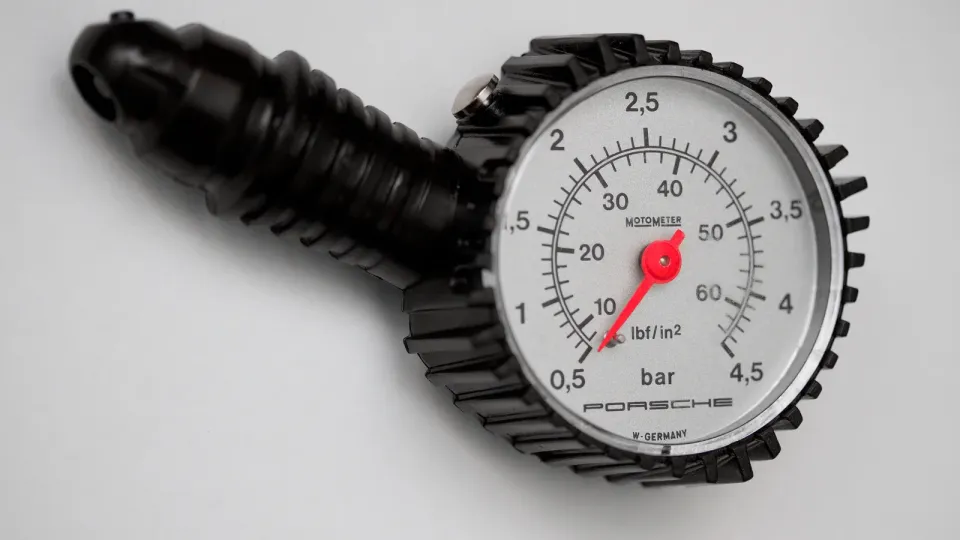
Photo: Antti / Wikimedia Commons, CC BY 2.0
Here is how I do it:
- Check once a month, with cold tires, before you drive.
- Use the number on the sticker inside the driver's door, not the number on the tire.
- Check the spare too.
Install Four Winter Tires, With the Best Ones at the Back
Transport Canada says to install winter tires in sets of four. If your tires have different wear, put the ones with the deepest tread on the rear. That helps keep the back of the car from sliding out.
Do not mix tires with different tread patterns or sizes. Two winter tires on the front and two all-seasons on the back is a recipe for a spin in the first icy curve.
Not sure which kind of tire you have? Our guide to winter tires vs all-season vs all-weather tires explains the symbols. And if you are in Ontario or Manitoba, read our winter tire insurance discount and MPI loan guide before you buy.
Book Early and Get the Car Ready for Dark, Cold Days
Shops fill up fast in November. Book as soon as the forecast starts to show highs under 7°C.
While the car is in the shop, ask about the battery. Cold weather is hard on old batteries. Our polar vortex car prep guide has a full checklist. And with the clocks going back, read our tips for driving in the dark.
FAQ
At what temperature should I put winter tires on?
Put them on when daytime highs stay below 7°C. Transport Canada says all-season and summer tires start to lose grip below that point.
How do I check winter tire tread with a coin?
Use a toonie. Push it into a tread groove. If the tread covers more than a quarter of the coin, CAA says the tire is good for another season.
What is the minimum tread depth for winter tires?
Transport Canada says not to use tires worn close to 4 mm on snowy roads. On signed B.C. highways, the legal minimum is 3.5 mm.
Is it OK to put only two winter tires on?
No. Transport Canada says to install winter tires in sets of four. Mixing tires can make the car less stable, especially when braking or turning.
When should I take my winter tires off?
When temperatures stay above 7°C. In Quebec, the rule ends March 15, but the government suggests waiting a few weeks after that date.


