The 2027 Toyota C-HR is now on sale in Canada, and it is Toyota's most affordable battery-electric vehicle, with a starting MSRP of $44,895. Toyota Canada announced the 2027 model on August 19, 2026, only months after the all-new electric C-HR first reached dealers. It offers up to 496 km of range, a standard 77 kWh battery and a sportier personality than the bZ it shares showrooms with.
Here is what the C-HR offers and whether it belongs on your EV shortlist.
From hybrid crossover to electric coupe-SUV
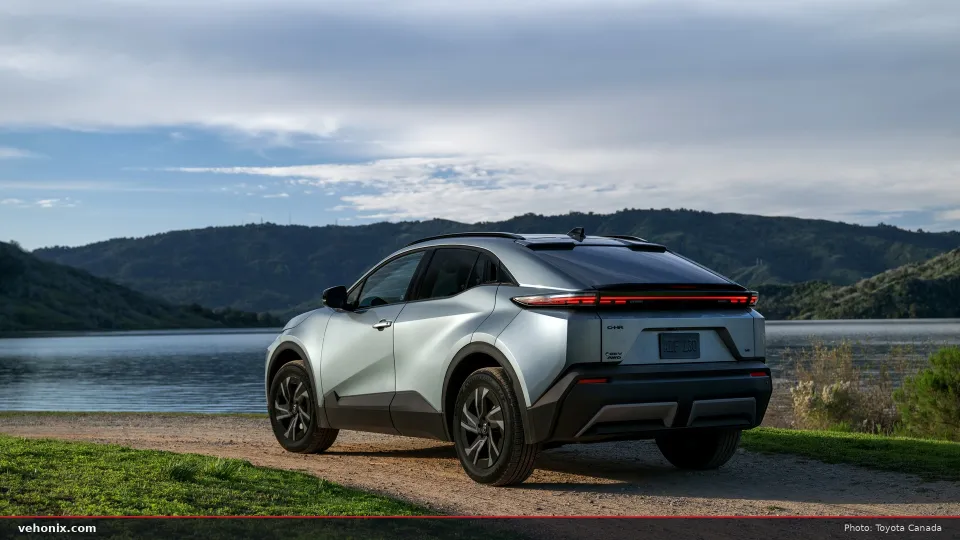
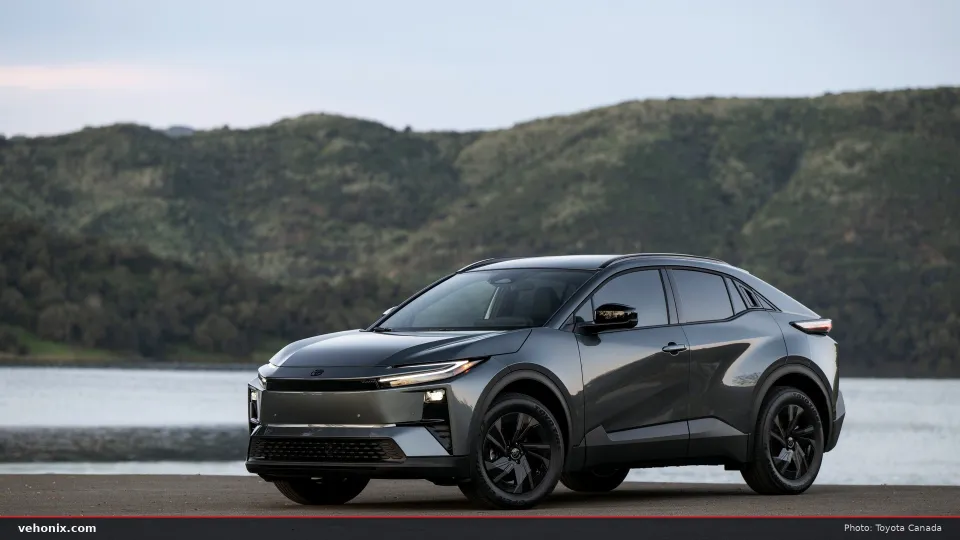
The C-HR name will be familiar, but the current model is a very different vehicle. The electric C-HR was developed from a compact BEV concept Toyota first showed in 2022, and it went on sale in Canada in the spring of 2026. It is a coupe-like compact SUV with a wide, low stance, flowing body lines and a sporty rear diffuser.
It measures 4,520 mm long, 1,870 mm wide and 1,620 mm tall, on a 2,750 mm wheelbase. That makes it shorter and a little lower than the bZ, but slightly wider.
One battery, two powertrains
Every 2027 C-HR uses a 77 kWh lithium-ion battery, so even the entry grade gets the big pack. That is a notable difference from the bZ, whose base model uses a smaller battery.
- SE (front-wheel drive): 221 system horsepower and up to 496 km of range.
- XSE AWD and XSE Premium AWD: two motors, 338 system horsepower and 0 to 100 km/h in 5.2 seconds, according to Toyota. Range is up to 452 km, or 438 km on the XSE Premium with its 20-inch wheels.
The C-HR rides on Toyota's e-TNGA platform, with the battery mounted low in the chassis. Toyota says the springs, dampers and anti-roll bar stiffness were tuned specifically for the C-HR, which fits its sportier positioning.
Steering-wheel paddles let the driver adjust regenerative braking across four levels, so you can choose between more coasting or more one-pedal-style slowing.
Charging
The C-HR uses a North American Charging System (NACS) port, giving it access to most high-speed chargers across North America. Under ideal conditions, Toyota says DC fast charging takes the battery from 10 to 80 per cent in about 30 minutes.
At home, an 11 kW onboard charger handles Level 2 charging. Toyota's 2026 specifications list a dual-voltage 120V/240V charging cable. Plug & Charge, which handles billing automatically at compatible stations, and a battery preconditioning system for more consistent charging times in cold weather are also part of the package.
Inside the cabin
Toyota says the C-HR has room for five adults. Standard features include SofTex-accented upholstery, two-zone automatic climate control, 64-colour ambient lighting, a heated steering wheel with paddle shifters and a digital gauge cluster.
Cargo space is up to 720 L behind the rear seats and up to 1,685 L with the 60/40 split rear seatbacks folded flat. A power liftgate is standard.
Technology is generous across the range:
- A 14-inch Toyota Multimedia touchscreen with wireless Apple CarPlay and Android Auto
- Safety Connect, Service Connect, Remote Connect and Drive Connect
- Dual wireless phone chargers
- Smart Key with push-button start and a digital key
- Four USB-C ports, including two rear ports with 60 W combined output, according to Toyota's 2026 specifications
The base SE also gets a 120V/1500W inverter, handy for powering small devices or tools.
Safety
Toyota Safety Sense 3.0 is standard on every C-HR, along with eight airbags, a rear seat reminder, a backup camera with Back Guide Monitor, and Blind Spot Monitor with Rear Cross Traffic Alert and Safe Exit Assist. The SE adds front and rear parking assist with automatic braking.
XSE grades add the Panoramic View Monitor, Traffic Jam Assist, Lane Change Assist, Front Cross Traffic Alert and a driver monitor camera.
Grades and pricing
| Grade | MSRP | Estimated vehicle price |
|---|---|---|
| SE (FWD) | $44,895 | $47,972 |
| XSE AWD | $49,945 | $53,022 |
| XSE Premium AWD | $54,395 | $57,472 |
The estimated vehicle price includes freight and PDI, the A/C charge, and maximum dealer and other fees, but excludes taxes, licence, insurance and registration. Each 2027 price is $5 lower than the corresponding 2026 MSRP. Our separate price guide breaks down each grade's features.
Where it fits
Toyota now offers 21 electrified models in Canada, including three battery-electric vehicles: the C-HR, the bZ and the bZ Woodland. Toyota Canada's Steve Pilkey describes the C-HR as its "most affordable battery-electric vehicle," with a starting MSRP below $45,000.
For many buyers, the C-HR's appeal is straightforward. The front-drive SE combines the lowest price among Toyota's EVs with the longest range, thanks to its 77 kWh battery. The AWD versions bring strong acceleration in a compact, stylish package. The trade-off is practicality: the bZ is a little longer and offers more cargo room behind the rear seats.
If you want a fun, efficient EV for daily driving and weekend getaways, and you value range over maximum cargo space, the 2027 C-HR deserves a test drive.

See full specs, colours and photos on our Toyota C-HR page.


